Endless scrolling. Liking. Sharing. Texting. Gaming.
It’s estimated that Americans spend an average of 4.5 hours looking at their phones every day. According to Consumer Affairs: The Journal of Consumer Research, people check their phones more than 144 times a day for emails, social media, taking photos, or surfing the internet.
Your thumb would like a word. Thumbs get a workout on smart phones. And depending on how you hold your phone, your hands, wrists, and elbows can also suffer.
ORA Orthopedics’ Occupational Therapist, Christine Lindorfer, says she often sees Quad City area patients in pain from overuse. “People scroll for hours. That phone can affect your thumb, pinky, wrist, elbow, and even your neck.
“Depending on how you hold your phone, we see anything from thumb to pinky pain. We are also treating trigger thumb, numbness and tingling in the hand and fingers, as well as tendonitis.”
Lindorfer explains that because some finger, hand, and wrist tendons connect all the way to your elbow, overuse in one area can affect your entire arm, especially if you hold your phone in the same position for hours at a time.
The American Academy of Orthopedic Surgeons (AAOS) confirms what Christine sees in her practice, that high demands are placed on the thumbs and wrists when people use their smartphones excessively. “Repetitive typing and swiping can lead to irritation and swelling of the thumb flexor tendon. Over time, some people can develop painful popping or locking of the thumb, a condition called ‘trigger thumb.’
“Holding a smartphone with your wrist and hand in an awkward, repetitive, prolonged position for a period of time can irritate the wrist and forearm tendons and may contribute to a painful condition known as ‘DeQuervain’s tendinosis.’
The AAOS also reports that people with pre-existing arthritis may also experience an increase in pain and swelling when the thumb basilar joint is overworked, such as with frequent texting.
Smartphone-related repetitive strain injuries include:
- Smartphone Pinky: The pinky appears separate from your other fingers, creating a wide gap next to the ring finger. You may also see a bump from how you support your phone.
- Cubital Tunnel Syndrome: Also known as “smartphone elbow,” this condition results from pressure placed on the ulnar nerve in response to repeatedly holding your arm at an angle. Along with pain, your fingers may appear contracted or bent, resulting in “text claw.” This injury stems from sitting in a slumped position while holding your phone or tablet.
- Texting Thumb: This overuse injury inflames the synovium or tissue surrounding the tendons traveling from the wrist to the thumb. You may experience pain and stiffness in this joint and find the condition accelerates the progression of arthritis.
- Tech or Text Neck: This condition relates to how you sit and hold your smartphone, tablet or laptop. Many of us hunch over, which shifts weight away from the core toward the head, neck and shoulders. You may notice increased pain in your neck, muscle spasms or experience a slipped disc.

ORA Treatment
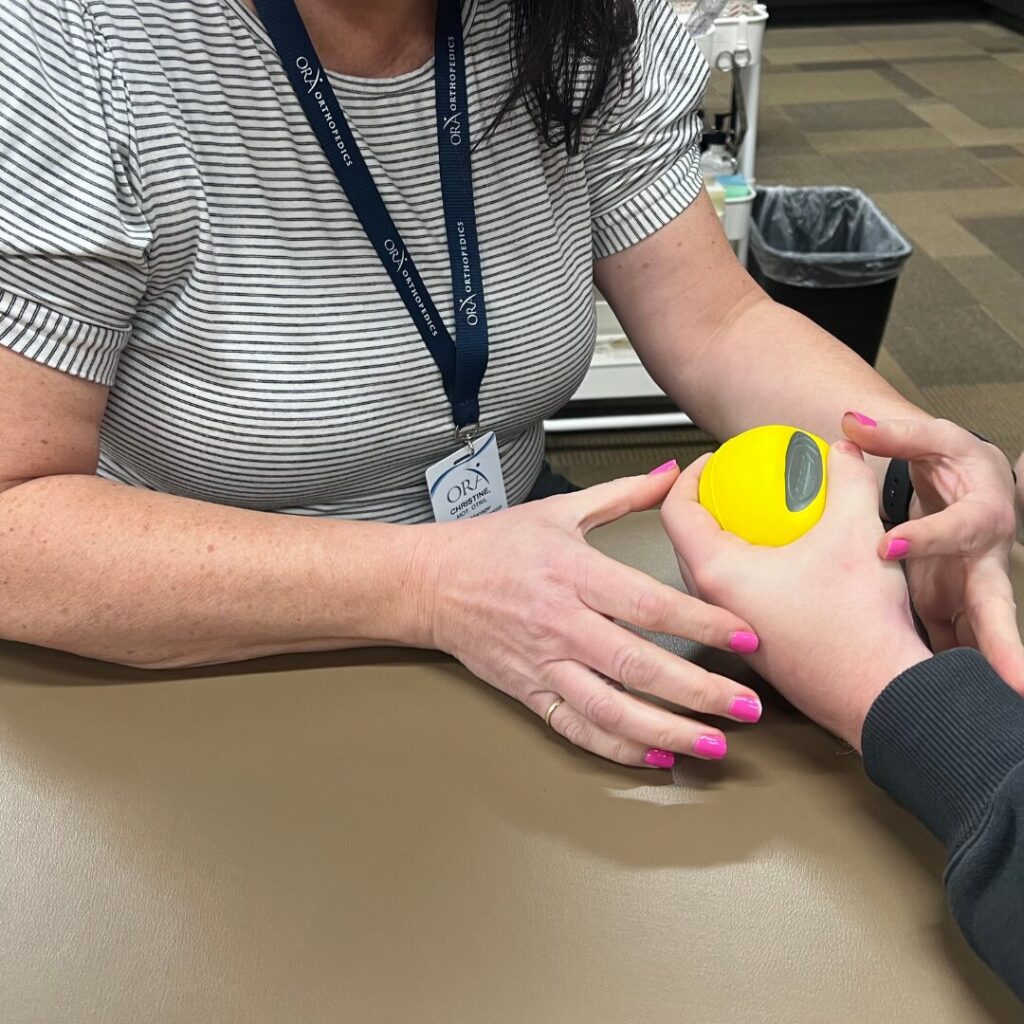
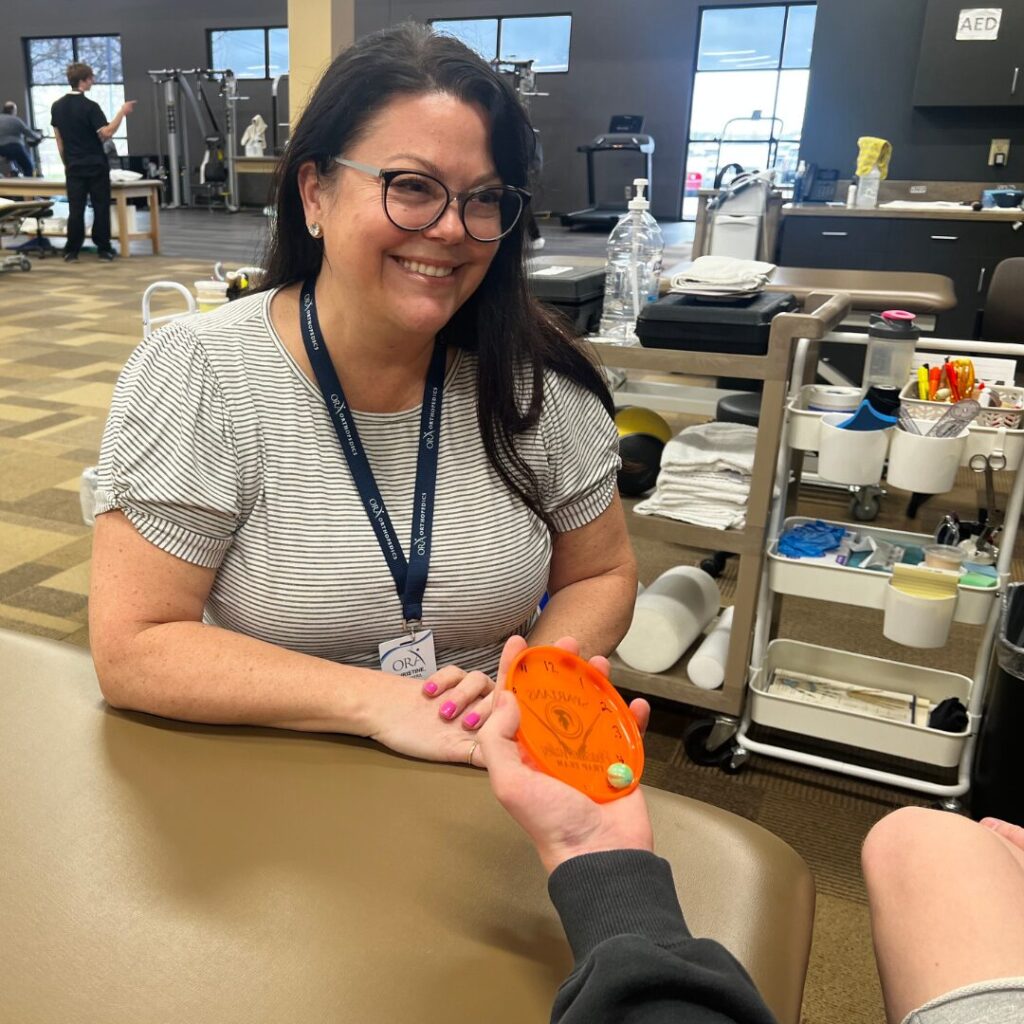
As Therapy Manager, Lindorfer manages a team of occupational therapists who employ a variety of treatments to end hand pain. “Occupational therapists focus on functional movement. If your hand hurts, we ask, ‘What is it keeping you from doing?’ So we can get you back to what is important to you.
“Our goal is to decrease pain so you can return to the activities that are important to you in your life. We focus on body mechanics and ergonomics, such as the way you hold your phone or perform activities of daily living like getting dressed or typing.”
Lindorfer cautions if any numbness, tingling, or pain doesn’t go away, it may be time to see your doctor, who can refer you to an OT.
She says after an OT has evaluated the cause of your pain, they’ll provide a therapeutic plan to treat, strengthen, and retrain the tendons, nerves, and muscles so you can perform tasks without further discomfort.
“We employ specific stretches and strengthening therapies for your fingers, hands, wrists, and arms as well as recommending adjustments to how you use and hold your phone and improve your posture. We want to take the stress off your elbows, wrists, and hands.”
Lindorfer says the number of therapeutic sessions is customized for each patient and lasts about 45 minutes. Visit ORA’s website for more information on OT hand treatments and therapies.