
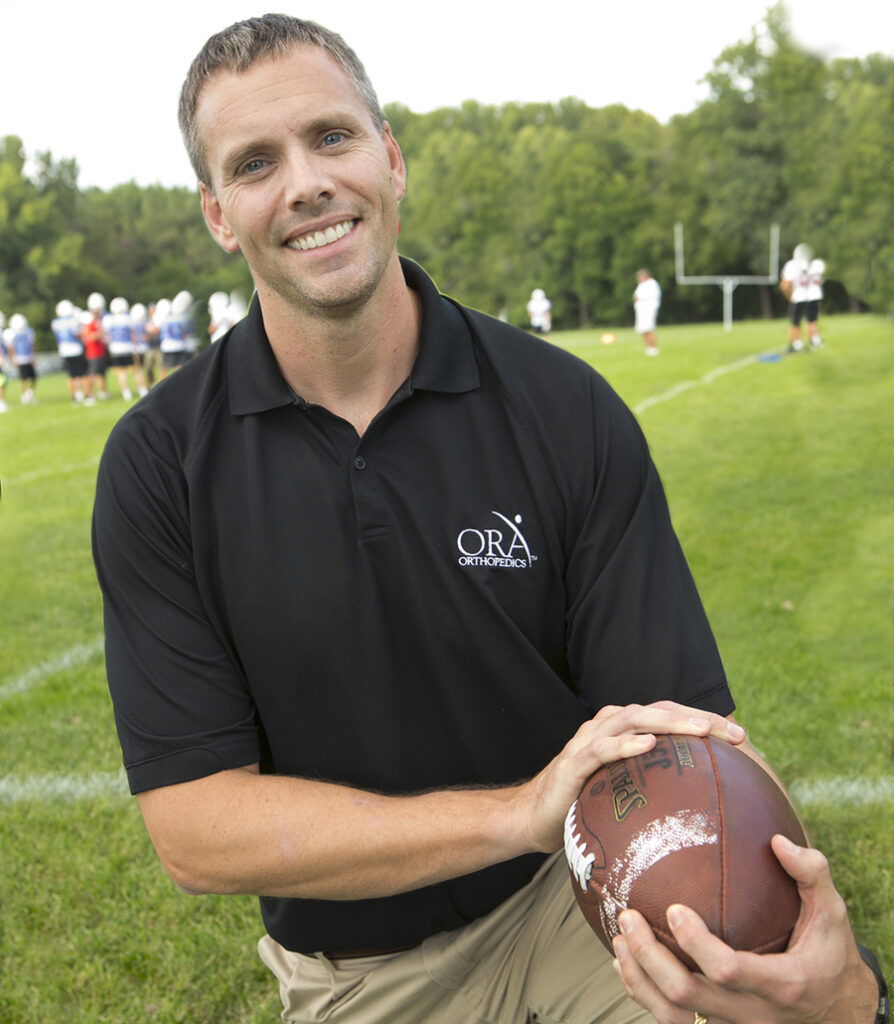
The fall of 2020 is one of empty stadiums for the first time in generations. COVID-19’s effects on high school and collegiate athletes, eager to play their fall sports seasons, have been chaotic and disappointing. Depending on a state’s athletic high school associations or collegiate leagues and conferences, sports such as cross country and golf in some areas have enjoyed full seasons, while others such as football and volleyball have been postponed until spring.
What’s an athlete in-training to do until there is a return to play? “Focus on the fundamentals,” advises Sports Medicine Surgeon, Dr. Andrew Bries, ORA Orthopedics. “This may seem counterintuitive, but a forced hiatus from one sport is not necessarily a devastating development.”

As an example, Dr. Bries says that when Quad City area baseball seasons were cancelled this past spring, he saw fewer throwing injuries, especially in pitchers. He also says that those who were injured have had more time to recuperate. As a team physician for Assumption High School as well as the Quad City (list hs/pro teams), Dr. Bries says we live in an era of extreme sport specialization when an athlete plays the same sport year ‘round. The demanding schedule can result in overtraining injuries in a young athlete’s bones, joints, and muscles.
“For the past few months during the pandemic, the injured athletes I have treated, for example, are those such as baseball players and pitchers who have kept up on their demanding training regimens, even after their seasons were cancelled. Young athletes need a break.”
Dr. Bries says COVID is a forced hiatus athletes can use to their advantage. “We have an opportunity to work on the fundamentals. I’m talking about good old-fashioned push-ups, jumping jacks, weight-lifting, those back-to-the basics types of exercise.
“Football players can work on training, agility, footwork, and build up strength in the weight room. Volleyball, soccer, and basketball players can focus on hip and core strength to prevent ACL and shoulder injuries. For baseball pitchers, they can also focus on core and hip strength as well as hand-eye coordination.
“It used to be more common for student athletes to cross-train by playing different sports throughout the school year: football players might also play basketball or participate in track and field events. The variety of activities protected their bodies from overuse.”
Dr. Bries says it’s important that when life throws a curve ball like a pandemic, winners know to pivot and take advantage of what they are given. “We need to keep things in perspective, knowing the loss of games or even one season does not have to be devastating.
“If you mix it up, your body will benefit in new and different ways, enhancing your strength, endurance, and flexibility. When our seasons do return, those athletes will be ready to head back to the diamond, field, soccer pitch, volleyball and basketball courts, and stronger than ever.”
